

Trauma & Attachment Therapy in Ottawa and Ontario
Are You Struggling To Help Your Child Or Teen Manage Type 1 Diabetes?

Do you want help supporting your child as they navigate type 1 diabetes? Lately, have they been dealing with:
· Emotional burnout and chronic anxiety?
· Feeling different, isolated, and misunderstood?
· School-related stress and concerns about their independence?
Maybe your child is having trouble navigating identity challenges tied to their condition. They might wish that they could have a normal life like their friends—one where they can go to sleepovers without having to worry about their blood sugar and go to school without constant alarms going off. They may be self-conscious about their diabetes and feel like no one understands them, creating a sense of loneliness and low self-esteem.
As a result, maybe you’re thinking it’s time to see a therapist who provides mental health support for children with type 1 diabetes.
Struggling with T1D, trying to help them with their medical needs without being overbearing isn’t easy. After all, you have to remind them to eat even when they don’t want to, give them injections regularly throughout the day, and constantly monitor their blood sugar levels. To a child, this attention can feel just as exhausting and frustrating as it is for the parent. It can lead to tension in the home and impact the whole family.
If you have a teenager with T1D, the shift from parent management to independent management can feel scary. You know that your child is old enough to monitor T1D on their own, but since you’re used to managing their condition yourself, learning to let go of that responsibility is hard.
At Connected Roots Therapy, our mission is to give you and your child the mental health support you need to make life enriching and joyful even as you navigate type 1 diabetes. We specialize in helping kids and teens learn to manage the emotional challenges of living with diabetes, and we also offer parent support so that you can more effectively support your child.

The Need to Constantly Monitor Your Child Could Lead to Tension in the Home
If You’re Having Trouble Parenting A Child Living With T1D, You’re Not Alone.

In spite of how common diabetes is, many people don’t know how the condition develops or how seriously it can impact someone’s life. Schools often don’t have the staff to support kids with diabetes or understand how the condition impacts a child’s social and emotional functioning. As a result, parenting a child with T1D can often feel like navigating uncharted waters, especially if you and your child don’t know many other people with diabetes.
With most of the T1D clients we see, the first year of diagnosis is always the toughest. It’s a time of massive transition and upheaval for the whole family, as there are so many routines and habits that everyone has to adjust to. When there are siblings in the picture, it can also lead to significant tension—the non-diabetic siblings can feel left out or unimportant because of how much of the family’s life revolves around the T1D child.
In a sense, diabetes often goes hand in hand with grief. When there’s a new diagnosis, you and your whole family can find yourselves grieving the life you used to have—one where there was no need for diabetes alarms going off throughout the day or concerns about the long-terms effects of the disease. Counselling can help you and your family work through those feelings of loss and work together to support your child in day-to-day life.
At Connected Roots Therapy, we help children, teens, and families living with type 1 diabetes as they navigate the emotional, relational, and psychological impact of their chronic illness. We’ll give your child a kid-friendly space where they can learn how to:
· Process grief around their diabetes
· Name their fears and normalize their feelings
· Talk to peers and family about T1D
· Increase their sense of belonging
· Navigate burnout from ongoing diabetes management
We can also work with your whole family in managing school-related stress, increasing independence in developmentally appropriate ways, and strengthening trust between you and your child around diabetes care. We’ll help you work through the overwhelm and strain that T1D can place on family dynamics and communication, allowing you to enjoy more peaceful relationships in the home.
As a practice, we believe that diabetes is a huge part of your child’s life—but it isn’t the only one. There are so many other wonderful aspects of your child & their life that therapy allows them to explore, and by helping them learn to manage living with T1D, they can explore those aspects in a deeper and more meaningful way.

Mental Health Support Is Essential When Living With Type 1 Diabetes
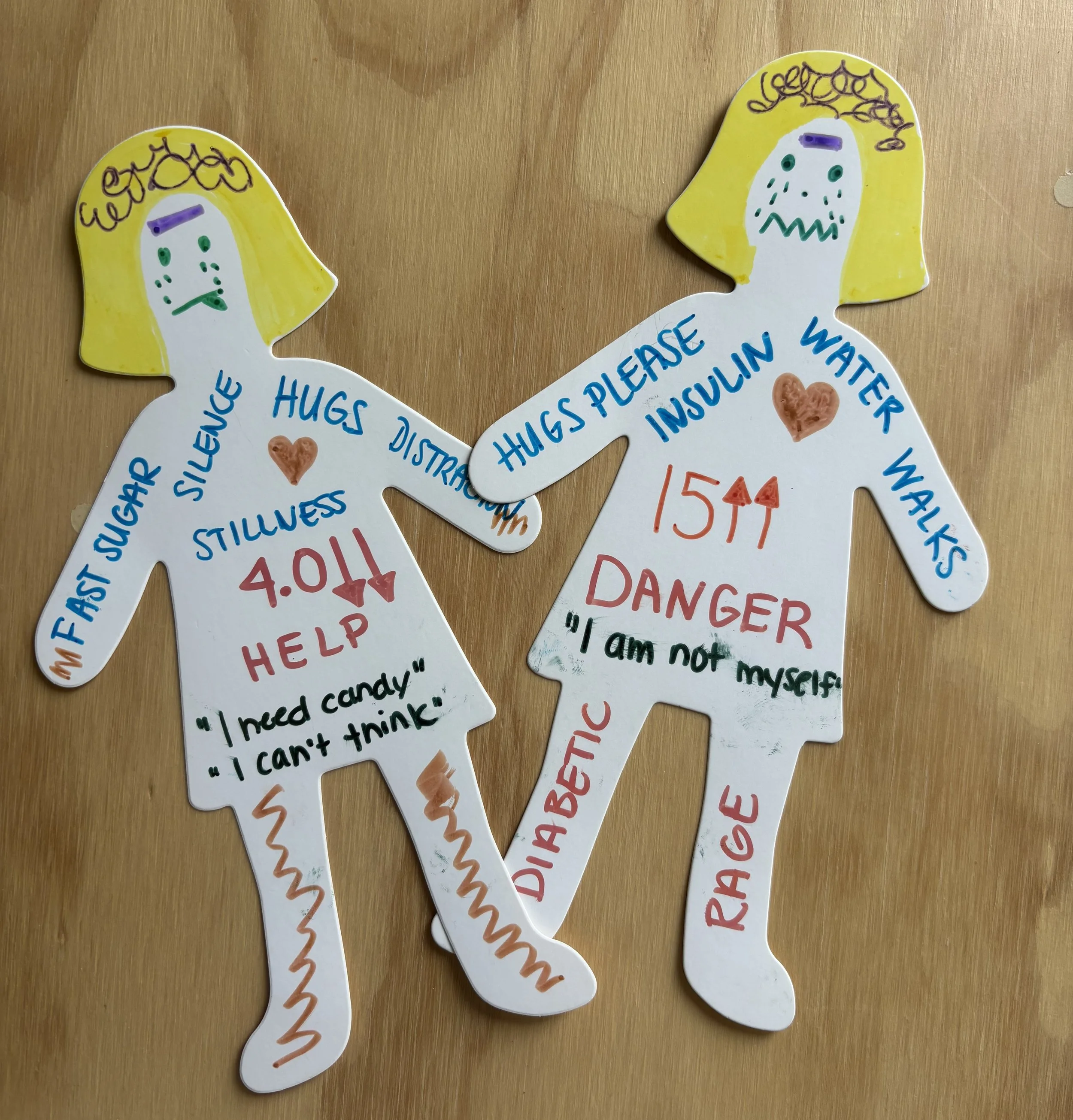
What To Expect In Counselling For Children And Teens With Type 1 Diabetes

In sessions with your child or teen, we will support them with regulating difficult emotions, coping with feeling different from their peers, and building a strong sense of identity beyond their diagnosis. Depending on the age, needs, and interests of your child, we can draw from a wide variety of age-appropriate strategies such as:
· Mindfulness-Based Skills like deep breathing and grounding techniques that can be used during blood sugar fluctuations and other stressful situations
· Play Therapy and Sand-Tray Therapy to help children and teens express big feelings around diabetes and creatively find new solutions to their challenges
· Attachment-Based and Family Systems Approaches for strengthening the relationship between parent and child and improving trust among family members
Our approach is client-centered, strengths-based, and deeply somatic, utilizing mind-body wisdom to help kids of all ages cope with T1D. As we work on assisting your child, we’ll also give you tools for managing hypervigilance, reducing burnout, and responding to your child in a way that supports both their safety and independence.
After all, we know that parent support is integral to any child’s journey with type 1 diabetes—that’s why we go out of our way to make parents and caregivers a crucial part of their children’s therapy. Diabetes may be an incredibly difficult and lifelong condition, but we’ve been able to help so many kids thrive and find meaning and purpose alongside their condition. Our mission is to support your child to do the same!
You May Have Some Questions About Mental Health Support for Type 1 Diabetes…

How do we know you’ll be able to relate to our situation?
Our practice owner, Sara Coyle, has T1D herself and is familiar with many of the same feelings as her clients. Sara also grew up with a T1D parent, so she has a unique perspective on living in a family where T1D was an everyday challenge.
What’s more, all of our therapists are trained in diabetes mental health support through the Breakthrough T1D Diabetes & Mental Health Training program, attend regular trainings and workshops on diabetes, and receive supervision specific to supporting children with T1D. Many of them also have their own experiences with diabetes themselves or in their families.
What role will I play in my child’s therapy journey?
At Connected Roots, we believe in having parents and caregivers involved in therapy as much as possible. Sessions with your child are confidential, but with their consent, we will still keep you informed about what we’re working on and have regular parent support sessions to discuss your child’s struggles with type 1 diabetes. For these sessions, you are welcome to see the same therapist as your child or a different one—it’s all about what’s best for you.
Won’t talking about diabetes with my child just make them more worried?
In reality, giving your child space to talk about their diabetes doesn’t make things worse—it prevents emotions from building up internally. When given space to explore their emotions with curiosity, acceptance, and free of judgement, these conversations can help your child reduce their anxiety, increase their confidence, and feel more involved and in control of their own treatment.

Your Child Can Still Lead A Joyful and Meaningful Life Living with T1D
Being diagnosed with type 1 diabetes is hard for anyone—but especially for a child. That’s why getting support for them is so essential. Through a family-oriented, child-friendly approach to therapy, we’re confident that we can help your child navigate the challenges of living with type 1 diabetes. To learn more about our practice, we encourage you to fill out the contact form. We look forward to connecting with you!

When Diabetes Feels Like Too Much: The Hidden Mental Load for Teens with T1D
The teen years can bring unique emotional challenges for those living with Type 1 Diabetes. Alongside managing blood sugars and daily diabetes care, many teens experience anxiety, burnout, stress, and feelings of being different from their peers. At Connected Roots Therapy, we understand the impact Type 1 Diabetes can have on mental health and overall well-being. This article explores common challenges and how therapy can help.